Socious Innovation Fund
2024

Launched a quadratic funding platform for social impact — 120+ projects onboarded, $500K matching fund at launch in round 1.
Context
Socious wanted to create a sustainable funding mechanism for open-source projects in the social impact space.
Inspired by Gitcoin's quadratic funding model, we extended the concept by incorporating an "Impact Score" that considers an individual's social and environmental contributions. We called it "Extended Quadratic Funding" (EQF).
The primary objective was to create a more inclusive and representative funding model that empowers projects from diverse backgrounds, particularly small, underrepresented open-source initiatives. By integrating the Impact Score, EQF aims to democratize the funding process and ensure a more equitable distribution of resources.
EQF offers several advantages over traditional crowdfunding platforms:
- Democratization of funding: The quadratic funding model ensures that a larger number of smaller contributions have a greater impact on the overall funding allocation, giving voice to a wider range of supporters.
- Impact-based rewards: The inclusion of the Impact Score incentivizes and rewards individuals who actively contribute to positive social and environmental change, fostering a community of engaged and socially conscious supporters.
- Transparency and accountability: Building on the Cardano blockchain provides a transparent and immutable record of all transactions, enhancing trust and accountability within the ecosystem.
Problem
Quadratic funding is complex. The matching amount is calculated based on the square root of contributions.

How do we make this math understandable and trustworthy for everyday users?
Process
Discovery
Key insight: Users need to trust the outcome, not understand the formula. We don't need to explain square roots; we need to explain impact.
Visualization Strategy
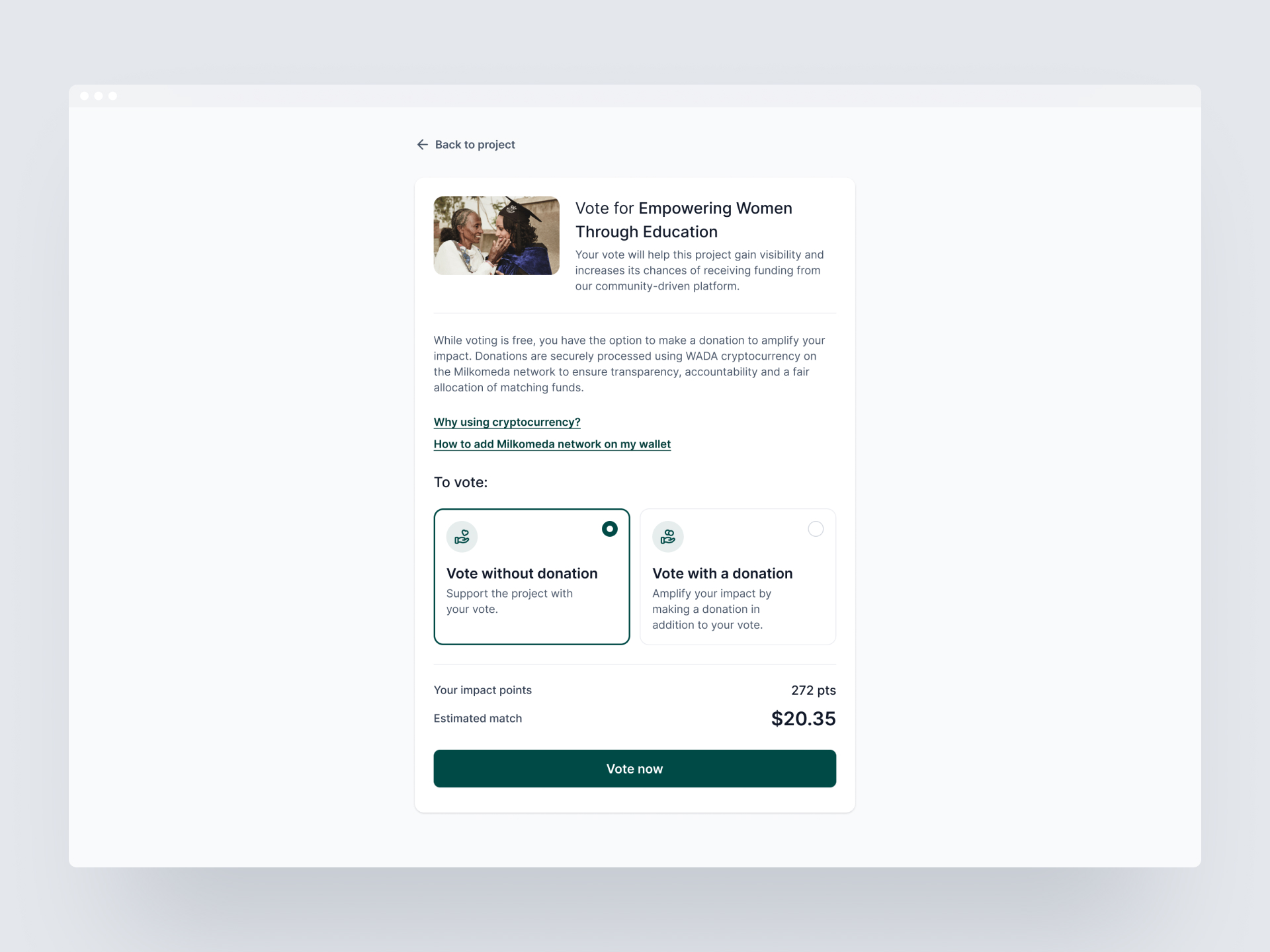
We tested different ways to show the "matching multiplier" effect.
- Failed Idea: Showing the math formula (too confusing)
- Winning Idea: Real-time calculator ("Your $10 could unlock $50")
Solution
Social Proof Indicators
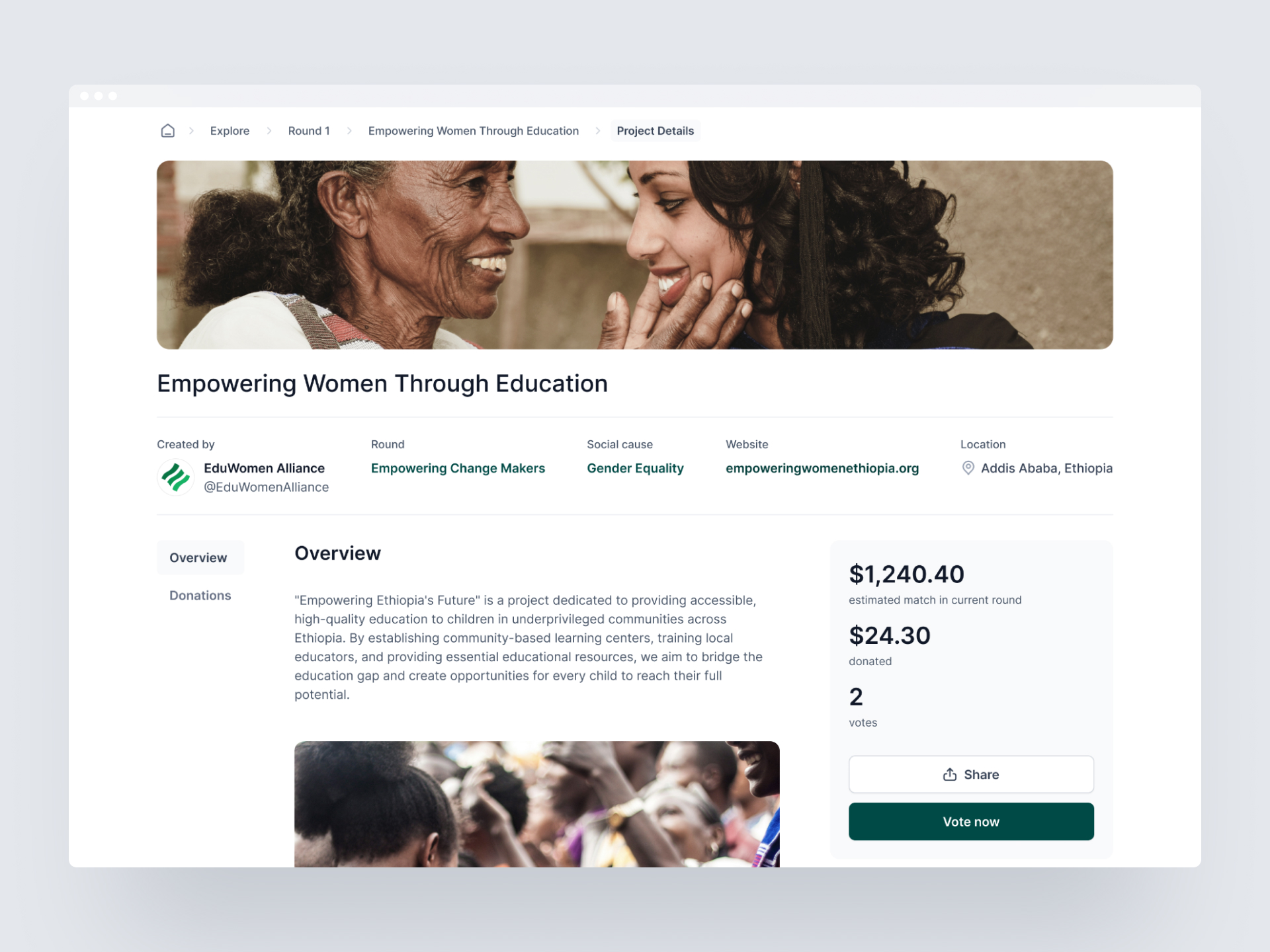
Emphasized "number of contributors" over "total amount raised" to align with QF mechanics.
Transparent Dashboard
Built a fund allocation view so creators could see exactly where the matching pool was going.
Impact
120+ Projects onboarded
$500K Matching fund secured
Socious Innovation Fund
2024
Launched a quadratic funding platform for social impact — 120+ projects onboarded, $500K matching fund at launch in round 1.
Context
Socious wanted to create a sustainable funding mechanism for open-source projects in the social impact space.
Inspired by Gitcoin's quadratic funding model, we extended the concept by incorporating an "Impact Score" that considers an individual's social and environmental contributions. We called it "Extended Quadratic Funding" (EQF).
The primary objective was to create a more inclusive and representative funding model that empowers projects from diverse backgrounds, particularly small, underrepresented open-source initiatives. By integrating the Impact Score, EQF aims to democratize the funding process and ensure a more equitable distribution of resources.
EQF offers several advantages over traditional crowdfunding platforms:
- Democratization of funding: The quadratic funding model ensures that a larger number of smaller contributions have a greater impact on the overall funding allocation, giving voice to a wider range of supporters.
- Impact-based rewards: The inclusion of the Impact Score incentivizes and rewards individuals who actively contribute to positive social and environmental change, fostering a community of engaged and socially conscious supporters.
- Transparency and accountability: Building on the Cardano blockchain provides a transparent and immutable record of all transactions, enhancing trust and accountability within the ecosystem.
Problem
Quadratic funding is complex. The matching amount is calculated based on the square root of contributions.
How do we make this math understandable and trustworthy for everyday users?
Process
Discovery
Key insight: Users need to trust the outcome, not understand the formula. We don't need to explain square roots; we need to explain impact.
Visualization Strategy
We tested different ways to show the "matching multiplier" effect.
- Failed Idea: Showing the math formula (too confusing)
- Winning Idea: Real-time calculator ("Your $10 could unlock $50")
Solution
Social Proof Indicators
Emphasized "number of contributors" over "total amount raised" to align with QF mechanics.
Transparent Dashboard
Built a fund allocation view so creators could see exactly where the matching pool was going.
Impact
120+ Projects onboarded
$500K Matching fund secured
Socious Innovation Fund
2024
Launched a quadratic funding platform for social impact — 120+ projects onboarded, $500K matching fund at launch in round 1.
Context
Socious wanted to create a sustainable funding mechanism for open-source projects in the social impact space.
Inspired by Gitcoin's quadratic funding model, we extended the concept by incorporating an "Impact Score" that considers an individual's social and environmental contributions. We called it "Extended Quadratic Funding" (EQF).
The primary objective was to create a more inclusive and representative funding model that empowers projects from diverse backgrounds, particularly small, underrepresented open-source initiatives. By integrating the Impact Score, EQF aims to democratize the funding process and ensure a more equitable distribution of resources.
EQF offers several advantages over traditional crowdfunding platforms:
- Democratization of funding: The quadratic funding model ensures that a larger number of smaller contributions have a greater impact on the overall funding allocation, giving voice to a wider range of supporters.
- Impact-based rewards: The inclusion of the Impact Score incentivizes and rewards individuals who actively contribute to positive social and environmental change, fostering a community of engaged and socially conscious supporters.
- Transparency and accountability: Building on the Cardano blockchain provides a transparent and immutable record of all transactions, enhancing trust and accountability within the ecosystem.
Problem
Quadratic funding is complex. The matching amount is calculated based on the square root of contributions.
How do we make this math understandable and trustworthy for everyday users?
Process
Discovery
Key insight: Users need to trust the outcome, not understand the formula. We don't need to explain square roots; we need to explain impact.
Visualization Strategy
We tested different ways to show the "matching multiplier" effect.
- Failed Idea: Showing the math formula (too confusing)
- Winning Idea: Real-time calculator ("Your $10 could unlock $50")
Solution
Social Proof Indicators
Emphasized "number of contributors" over "total amount raised" to align with QF mechanics.
Transparent Dashboard
Built a fund allocation view so creators could see exactly where the matching pool was going.
Impact